
External width refers to the total horizontal measurement of a kegerator from side to side. Your specific requirement depends on the available floor space in your installation area and the clearance needed for the door to swing open.
Which External Width Suits Your Space?
| If this is you | The External Width that suits you | Why |
|---|---|---|
| You are placing the unit in a narrow hallway or a small pantry. | 24 in. to 28 in. | Compact models maximize floor space in high-traffic corridors. |
| You need a standard home setup with a 1/6 barrel or 1/2 barrel keg. | 28 in. to 32 in. | This range accommodates standard internal cooling components and insulation. |
| You are installing the unit in a dedicated home bar or large garage. | 32 in. to 36 in. | Wider units often provide more internal storage for extra glassware or supplies. |
| You require a high-capacity unit for a commercial-style home tap. | 36 in. plus | Larger footprints allow for heavy-duty cooling systems and larger internal volumes. |
Products in this category with a full review here
From $179.99 to $891.45: the 3 in this category we have reviewed in full.

Kegco Keg Dispenser
$629.90 price checked August 2026
Read our full Kegco Dispenser review
If you need to serve multiple varieties at once, see our roundup of the best triple faucet kegerator options.

Kegco HBK309B-1 Keg Dispenser
$891.45 price checked August 2026
Read our full Kegco HBK309B-1 review
For those with limited floor space, view our guide to the best compact mini kegerator models.
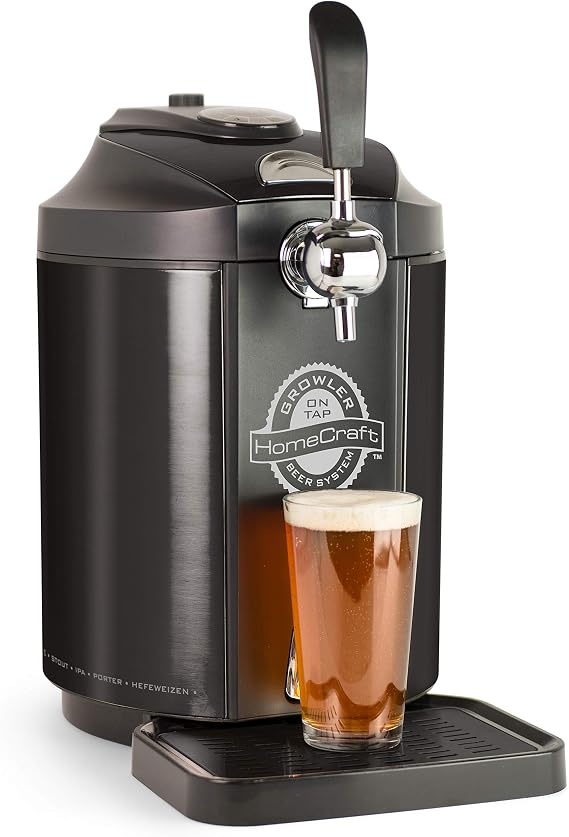
Homecraft Black Stainless Steel Mini Kegerator Cooling System
$179.99 price checked August 2026
Read our full Homecraft Mini Kegerator review
You should also consider how to measure external depth for kegerators before finalizing your layout.
How to Measure Your Space for a Kegerator
To determine your required external width, you must measure the specific alcove or floor area where the kegerator will sit. Use a metal tape measure to record the width of the space, ensuring you account for any baseboards or trim that might protrude from the wall.
Accounting for Door Swing
The external width of the kegerator is only half of the spatial requirement. You must ensure there is enough clearance for the door to swing open at least 90 degrees. If the unit is placed against a wall, the door on that side may have restricted movement, requiring you to measure the depth of the unit’s handle and the arc of the door’s swing.
Locating Width on Product Specifications
Manufacturers typically list the external width in the technical specifications section of the product description. Look for the “External Width” or “Dimensions” label, which will provide the measurement in inches. Always confirm that the measurement includes the door handles and any side protrusions, as these are often the points of contact that prevent a unit from fitting into a tight space.
What Happens if the External Width is Incorrect?
Choosing an external width that is too large for your space results in a unit that physically cannot enter the room or prevents the door from opening. If the unit is squeezed into a space with only a fraction of an inch of clearance, the friction against the walls can damage the exterior finish or make it impossible to slide the unit into place.
Risks of an External Width That is Too Large
If the external width exceeds your available space by even a small margin, the kegerator will block walkways or prevent adjacent furniture from being placed correctly. In tight configurations, a unit that is too wide may also prevent the door from opening wide enough to remove a keg for replacement, effectively locking the keg inside the cabinet.
Make sure to evaluate the proper external height for kegerators to ensure it fits under your counter.
Risks of an External Width That is Too Small
While a smaller external width saves space, it may limit the internal capacity of the unit. If you choose a narrow model to fit a small niche, you may find it cannot accommodate a full 1/2 barrel keg or may lack the internal depth required for proper cooling airflow. A unit that is too narrow for your needs might force you to use smaller 1/6 barrel kegs more frequently, increasing the cost and effort of refilling.
What to Do if You Fall Between Two Widths?
If your measured space is exactly between two standard external width options, you should prioritize the smaller dimension. It is easier to add a few inches of clearance to a floor plan than it is to remove physical obstructions from a permanent structure.
Creating a Safety Buffer
We recommend leaving at least 1 to 2 inches of “wiggle room” on either side of the kegerator. This buffer allows for easier cleaning, airflow for the cooling system, and prevents the unit from being wedged tightly against walls. If your space is 30 inches wide, a 28-inch wide unit provides the necessary clearance to ensure the door functions correctly and the unit can be moved for maintenance.
Final Verification of Local Rules
Before finalizing your choice based on external width and placement, confirm the local requirements for your specific location regarding appliance installation and ventilation. Some areas may have specific requirements for how much clearance is needed around cooling units to ensure proper operation and safety.
Browse our other Kegerator pages
- Best Full Size Kegerators for Home Use
- Dual Tap Kegerators for Serving Multiple Draft Beers Compared
- Choosing the Best Kegerator for 1/6 Barrel Use
- The Triple Faucet Kegerators That Work Best for Serving Three Draft Beers
- Which Homebrew Kegerator Is Best for Your Setup?
- Best Compact Mini Kegerators for Small Spaces