
Most residential and light commercial projects require a nail length capacity between 2 and 3.5 inches. Selecting the correct range ensures the tool can drive the specific fasteners required for your project without causing structural failure or surface damage.
Recommended Nail Length Capacity by Use Case
| Use Case | Recommended Nail Length Capacity | Why this number |
|---|---|---|
| Trim Work and Molding | Up to 2 inches | Short nails are sufficient for thin wood and decorative trim where deep penetration is unnecessary. |
| Subflooring and Decking | 2 to 3.5 inches | These lengths provide the necessary hold for structural wood while remaining manageable for standard framing. |
| Heavy Framing | 3 to 4 inches | Standard framing requires longer fasteners to ensure the nail passes through the stud and into the plate. |
| Roofing and Siding | Up to 3 inches | Siding and roofing require specific lengths that balance penetration depth with the thickness of the exterior material. |
Where these choices show up in our reviews
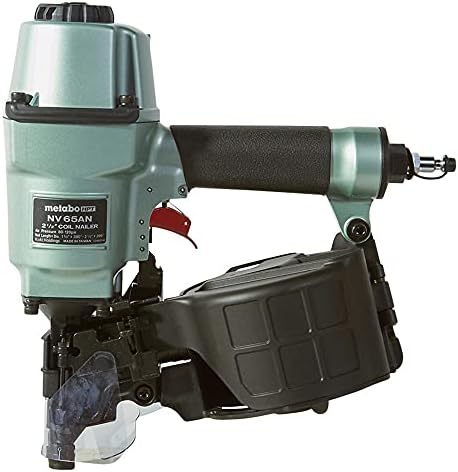
These 3 have their own full review on this site, and run from $148.99 to $309.
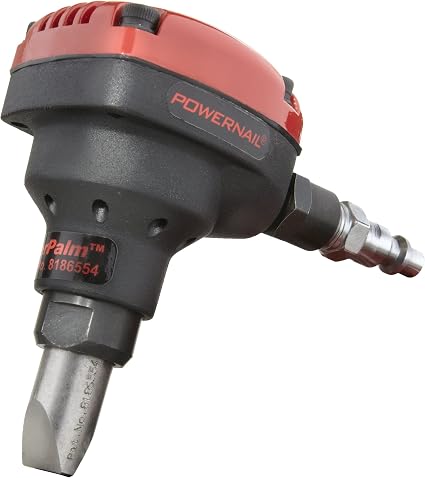
Powernail Power Palm Pneumatic Nailer
$160 price checked August 2026
If you are focusing on subfloor installation, view our comparison of the best framing nailer for flooring.
What Happens if You Go Under or Overbuy Nail Length Capacity?
Under-provisioning occurs when the pneumatic nail gun cannot accept the length of nail required for the task. If you need to drive a 3-inch nail into a structural beam but your tool is limited to 2.5 inches, the nail will not seat correctly. This results in “proud” nails that protrude from the surface, creating a snag hazard and a structural weak point. In many cases, trying to force a longer nail into a tool with a restricted capacity can cause the nosepiece to jam or the internal piston to strike the magazine prematurely, potentially damaging the internal components.
The Practical Costs of Under-Provisioning
If a tool’s capacity is too low, you are forced to stop work and switch to a different tool or a manual fastening method. This breaks your workflow and can lead to inconsistent fastening patterns across a large project. You may also find yourself purchasing multiple different nail guns to cover different tasks, which increases your total cost of ownership and requires more storage space for various tools.
For those on a strict budget, see our guide to the best palm pneumatic nailer under $200.
Overbuying nail length capacity involves choosing a tool capable of driving 4-inch nails when your project only requires 2-inch trim nails. While this ensures you can handle heavy-duty tasks, it often leads to a larger, heavier tool that is less ergonomic for precision work. A nail gun designed for 4-inch fasteners typically has a longer barrel and a larger magazine, making it harder to maneuver in tight corners or near ceilings.
The Real Cost of Over-Buying
The primary cost of over-buying is the weight and bulk of the hardware. A tool built for high-capacity nails often requires a more robust internal piston and a larger cylinder, which adds significant weight to the handle. For a user primarily doing finish work, this extra weight leads to faster fatigue and less precision. Additionally, larger capacity tools may have a larger “footprint,” making them difficult to use in residential spaces where clearance is limited.
The Mistake Most Buyers Make with Nail Length Capacity
The most common mistake is assuming that a higher nail length capacity automatically makes a tool more versatile for all tasks. Buyers often choose the highest possible capacity available because they assume it will “do everything.” However, a tool optimized for 4-inch nails is often less capable of performing delicate trim work because the firing mechanism and nosepiece are designed for high-impact, deep penetration rather than controlled, shallow placement.
Optimizing for Application over Maximums
You should optimize for the most frequent task you will perform. If 90% of your work involves installing interior molding, a tool with a 2-inch capacity is the correct choice. It will be lighter, more accurate, and easier to handle. If you occasionally need to do framing, it is more cost-effective to own a dedicated framing tool than to use a heavy, cumbersome tool for every minor task. Focus on the primary application to ensure the tool feels balanced in your hand during the hours of use that matter most.
How Nail Length Capacity Interacts with Other Deciding Specs
Nail length capacity does not exist in a vacuum; it is governed by the magazine type and the required gauge of the nail. A tool might have a 3.5-inch capacity, but if the magazine is designed only for collated nails, you cannot use the strip nails that are often required for specific framing lengths. You must ensure the magazine type matches the fastener format required by your specific nail length.
Gauge Size and Length Constraints
The gauge of the nail (such as 16, 18, or 23) defines the wire thickness. Thicker nails (lower gauge numbers) require more force to drive and may be limited by the tool’s power even if the length capacity is technically sufficient. For example, a tool rated for 3-inch nails might struggle to drive a heavy 16-gauge nail at that length, even though it fits the capacity. Always check the gauge rating alongside the length capacity to ensure the tool can provide enough force for the specific wire thickness you intend to use.
CFM and Pressure Drop Limits
The length of the nail also impacts the air pressure required to drive it. Longer nails require more volume of air to move through the barrel and into the wood. If you use a tool at the top of its length capacity consistently, you may experience a pressure drop if your compressor cannot provide enough CFM (cubic feet per minute) to maintain a steady firing speed. For high-volume work using the maximum capacity of the tool, the compressor’s output becomes the real limiting factor, regardless of the tool’s internal capacity.