
Nail Angle refers to the specific degree of tilt at which a pneumatic nail gun drives a fastener into a workpiece. The correct degree depends entirely on the specific type of material you intend to fasten and the orientation of the wood or metal surfaces.
Which Nail Angle matches my project?
| If this is you | The Nail Angle that suits you | Why |
|---|---|---|
| You are framing walls or building heavy timber structures. | 21 Degree | This is the standard angle for framing nails, allowing the tool to drive fasteners into heavy lumber with the necessary clearance. |
| You are installing coil siding or specific types of trim. | 15 Degree | A shallower 15 Degree angle is required for coil siding nails to ensure the fastener enters the material at the correct trajectory. |
| You are performing general carpentry or furniture assembly. | 21 Degree | Most standard collated nails are designed for a 21 Degree drive, making this the most versatile option for general construction. |
| You are working with specialized trim or finishing work. | 15 Degree | If your specific trim fasteners are designed for a 15 Degree drive, using a standard 21 Degree tool will result in poor fastener seating. |
Pneumatic Nail Guns covered by our own reviews
3 reviewed options, $125.99 to $309, with the full write-up behind each name.

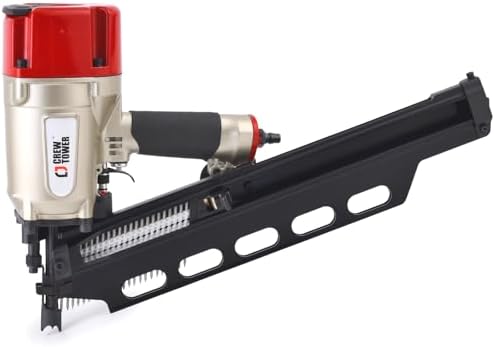
21 Degree Framing Nailer
If you are working on a pitched roof, explore the best framing nailer for roofing to find a durable tool for high-angle work.
$169.99 price checked August 2026
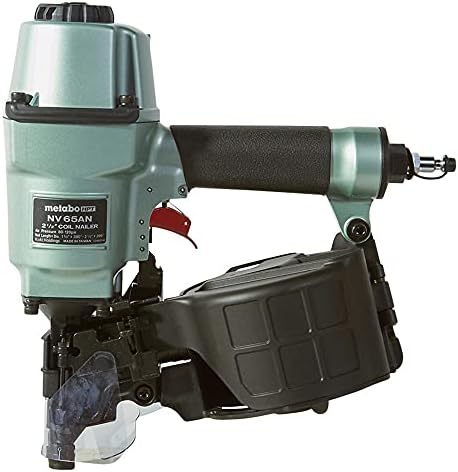
Metabo HPT NV65AN Coil Pallet Pneumatic Nailer
$309 price checked August 2026
Read our full NV65AN Coil Nailer review
For those building outdoor boundaries, see top rated nail guns for wood fencing to ensure your posts stay secure.
How do I measure or establish my Nail Angle before ordering?
To establish your required Nail Angle, you must identify the specific gauge and type of fastener you intend to use. The Nail Angle is a fixed geometric property of the nail itself, not a variable you choose based on preference.
Identifying the correct fastener specifications
Check the packaging of the nails you plan to purchase. Manufacturers typically print the required drive angle on the box or the technical specification sheet. Look for a degree symbol (°) followed by a number, such as 21° or 15°.
Comparing nail geometry to tool requirements
If the packaging does not list the angle, you can determine it by the nail’s head shape and the intended application. For example, standard framing nails are almost universally designed for 21 Degree tools. If you are unsure, you can measure the angle of the nail’s shank relative to the head using a protractor, though checking the manufacturer’s documentation is the most reliable method.
What happens if I choose the wrong Nail Angle?
Choosing a Nail Angle that does not match your fasteners leads to mechanical failures during the fastening process. These issues manifest as physical problems with how the nail enters the material.
The results of an incorrect Nail Angle
If you use a 21 Degree nail in a 15 Degree tool, the nail may not seat fully. This results in “proud” nails, where the head sits above the surface of the wood, creating a snag hazard or a visible defect in the finish.
Understanding the drive system is vital, so look at different magazine types for pneumatic nail guns to find your preferred loading style.
The risk of tool jamming and obstruction
Conversely, attempting to use a 15 Degree nail in a 21 Degree tool can cause the nail to bind against the nosepiece. This creates a significant risk of the tool jamming. A jammed nosepiece can cause the tool to kick back or stop functioning entirely until the obstruction is cleared.
What should I do if I fall between two Nail Angles?
If your project requirements seem to sit between two common Nail Angles, you must prioritize the specific fastener you intend to use most frequently. Because the Nail Angle is a physical constraint of the nail’s geometry, you cannot “compromise” between a 15 Degree and a 21 Degree tool.
Selecting the primary fastener type
Determine which fastener represents the majority of your project’s needs. If 90% of your work uses standard framing nails, select the 21 Degree tool. If the project is exclusively for a specialty application like coil siding, you must select the 15 Degree tool.
Understanding tool versatility limits
A pneumatic nail gun is purpose-built for a specific nail geometry. You cannot use a 15 Degree nail in a 21 Degree tool effectively, nor can you use a 21 Degree nail in a 15 Degree tool. If you need to perform both types of work, you will need two separate tools, as the hardware is not interchangeable.
Checking return policies for incorrect orders
Because Nail Angle is a non-negotiable specification, verify the return policy of the supplier before ordering. Since these tools are often heavy and specialized, knowing the window for returning a tool that does not match your specific nail requirements is a practical step for your purchase.