
Most residential and small-scale construction projects require a rebar bender capable of handling a maximum rebar diameter of 12mm to 16mm. For heavy industrial infrastructure, such as bridge supports or high-rise foundations, you typically need a machine capable of bending 25mm bars or larger.
Recommended Maximum Rebar Diameter by Use Case
| Use Case | Recommended Maximum Rebar Diameter | Why this number |
|---|---|---|
| Home DIY & Small Fencing | 10mm to 12mm | Standard residential reinforcement rarely exceeds these sizes. |
| Light Commercial & Sheds | 16mm | Allows for standard structural reinforcement in smaller buildings. |
| Heavy Construction & Foundations | 25mm | This is the threshold for portable hydraulic units before industrial stationary machinery is required. |
| Industrial Infrastructure | 32mm+ | Requires heavy-duty industrial benders for large-scale structural support. |
Products in this category with a full review here
These 3 have their own full review on this site, and run from $208.69 to $489.98.

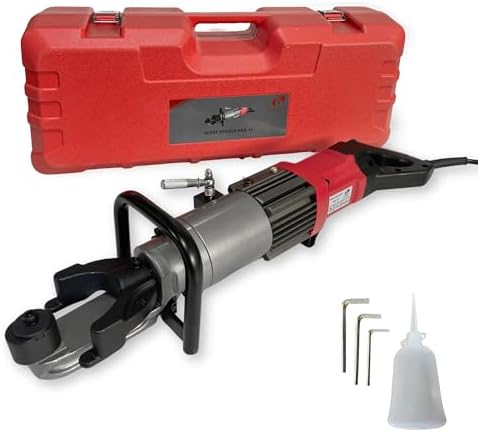
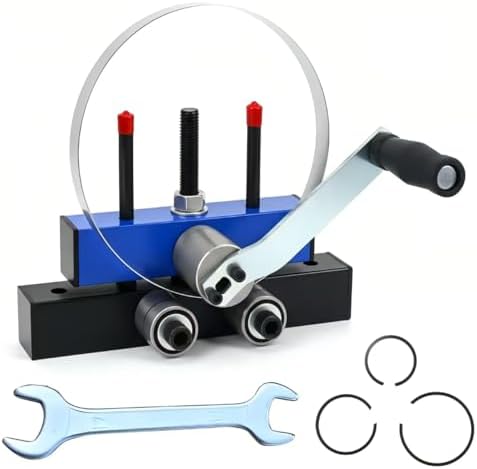
Manual Roller Bender for Steel Plate and Sheet
$208.69 price checked August 2026
If you are working with smaller rods, you can find the best electric hydraulic rebar bender for 5/8 inch rebar to see how different models compare.
What Happens if You Under-Provision or Over-Buy?
Under-provisioning occurs when the rebar bender’s maximum capacity is smaller than the diameter of the steel you need to shape. If you attempt to bend a bar that exceeds the machine’s rated capacity, the material may reach its yield strength and become permanently deformed or fail to bend at all. In extreme cases, exceeding the rated capacity can cause structural crack propagation, where micro-fractures form in the reinforcement, compromising the integrity of the finished concrete structure.
Risks of Under-Provisioning
If the tool cannot handle the thickness of the bar, you face a complete work stoppage. You cannot simply “force” a larger bar through a smaller bender without risking a snapped rod or damage to the bending mechanism. This forces you to rent larger equipment or hire a professional service, which often costs more than purchasing a slightly larger tool initially.
The Real Cost of Over-Buying
Over-buying happens when you purchase a high-capacity bender that far exceeds your project requirements. While a 32mm bender can certainly handle 12mm bars, these heavy-duty machines are significantly more expensive and often much heavier to transport. If you only need to bend 12mm bars for a backyard project, paying for the capacity to bend 32mm bars is a waste of budget on features you will never utilize.
The Mistake Most Buyers Make with Maximum Rebar Diameter
The most common mistake is selecting a bender based solely on the maximum rebar diameter without considering the volume of work. Many buyers choose a high-capacity bender because they want “the best” capability, but they often find the machine is too cumbersome for the frequent, smaller tasks they actually perform.
Optimizing for Workflow
Instead of just looking at the maximum diameter, you should optimize for the frequency of the bar size you use most often. If 90% of your work involves 10mm bars, a manual rebar bender that handles 12mm is often more efficient than a heavy hydraulic bender that handles 25mm. Focus on the diameter that represents your primary workload to ensure the tool is easy to maneuver and quick to operate.
How Maximum Rebar Diameter Interacts with Other Deciding Specs
Maximum rebar diameter is often limited by other physical and mechanical specifications of the tool. A high diameter rating is useless if the tool’s other specs prevent you from completing the job efficiently or safely.
Power Source and Portability
The power source often dictates the maximum diameter a portable unit can handle. Manual rollers are limited by human strength, while hydraulic benders require a power source. If you need to bend 25mm bars but require a portable solution, you must ensure the hydraulic unit has the necessary pressure output to meet that threshold. If the power source is insufficient, the bender will stall regardless of its theoretical diameter capacity.
Bending Radius and Material Work Hardening
The maximum diameter also interacts with the bend radius and the speed of the operation. Improper bending speeds or angles can cause material work hardening, where the steel becomes brittle and prone to snapping. A bender that can technically handle a 20mm bar might still fail if the required bend radius is too tight. You must ensure the bender’s geometry allows for the specific angles required by your structural plans, such as the standard 90-degree bend used for stirrup fabrication.
Weight and Maneuverability
As the maximum rebar diameter increases, the weight of the bending tool typically increases significantly. A bender capable of high-diameter bars may be too heavy to move around a job site easily. You must weigh the necessity of a high diameter against the physical effort required to position the tool. If you are working in a confined space, a slightly lower diameter limit on a lighter, more mobile tool may be the more practical choice.
More Rebar Bender explainers and comparisons
- Best Rebar Bender for Bending Up to 130 Degrees
- Manual Roller Benders for Steel Plate Compared
- Which Portable Electric Rebar Bender Is Best for Construction Sites?
- Best Manual Rebar Bender for Home Use
- Electric Hydraulic Rebar Benders for 5/8 Inch Rebar Compared
- Choosing the Best Rebar Bender and Cutter 2 in 1 Tool