
Depth refers to the measurement of a freestanding bathroom vanity with sink from the front of the unit to the back wall. Your specific bathroom layout and the amount of floor space available dictate which depth measurement is correct for your home.
Which depth is right for my bathroom?
| If this is you | The Depth that suits you | Why |
|---|---|---|
| You have a narrow hallway or a small powder room | 16 to 18 inches | These shallow depths allow for passage in tight spaces while still providing a functional basin and storage. |
| You have a standard-sized residential bathroom | 20 to 22 inches | This is the standard depth for most residential vanities, providing a balance of counter space and storage. |
| You have a large master bath or a spacious ensuite | 24 inches or more | Deeper units provide extensive counter space and larger drawer configurations for heavy storage needs. |
| You need to maintain a specific clearance for a door swing | Varies by door swing radius | The depth must be less than the clearance provided by the door’s arc to ensure the door can open fully. |
Where these choices show up in our reviews
3 reviewed options, $159.99 to $229, with the full write-up behind each name.
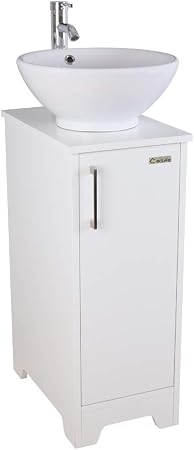
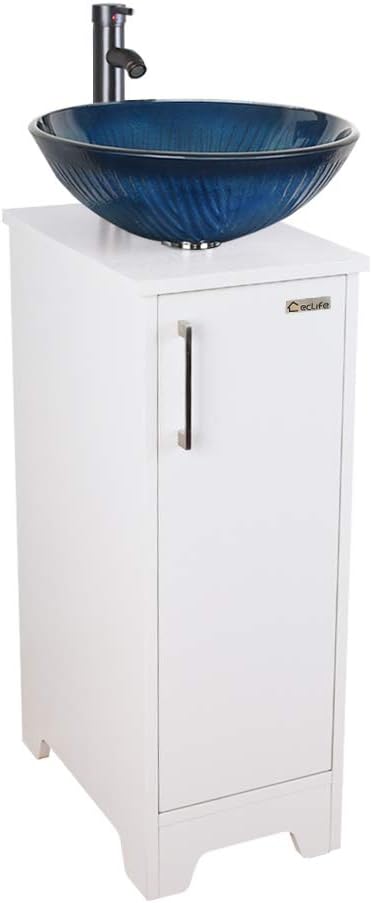
Okeysen 13″ Bathroom Vanity and Sink Combo
$159.99 price checked August 2026
If you are designing a secondary space, see top-rated freestanding bathroom vanity with sink for guest bathroom options.

How do I measure the depth for a freestanding vanity with sink?
To determine your required depth, you must measure the clear floor space between the bathroom wall and the nearest obstruction, such as a toilet, bathtub, or doorway.
Understanding your needs is easier when you compare different sink types for bathroom vanities with sink first.
Tools for accurate measurement
Use a standard metal tape measure to ensure accuracy to the nearest quarter-inch. Avoid using cloth measuring tapes, as they can stretch and lead to a vanity that is too deep for the space.
Where to find the depth on the product
The depth of a freestanding bathroom vanity with sink is usually listed in the manufacturer’s technical specifications as “Depth” or “D”. This measurement typically refers to the cabinet carcass, but you should check if the vanity includes a protruding countertop or a front-facing ledge that adds to the total depth.
Accounting for clearance and door swings
You must account for the “swing zone” of the bathroom door. If the door opens into the room, the vanity depth must be shallow enough to allow the door to open at least 90 degrees without hitting the unit. Additionally, ensure there is enough clearance for a person to stand in front of the vanity and move their arms freely to use the sink.
What happens if the vanity depth is too small?
If the vanity depth is too small, the primary issue is a lack of usable counter space and limited internal storage capacity.
Limited surface area
A shallow vanity may only provide enough room for a soap dispenser and a toothbrush holder. If you need to lay out hair tools, skincare products, or toiletries, a depth under 18 inches may feel cramped and result in items constantly being moved to make room.
Restricted internal storage
Smaller depth units often have narrower drawers and cabinets. This can limit the size of items you can store, such as large bottles of shampoo or bulky cleaning supplies, which may not fit comfortably inside the cabinet carcass.
What happens if the vanity depth is too large?
If the vanity depth is too large, the primary issue is a physical obstruction that interferes with the movement and functionality of the bathroom.
To ensure your unit fits the layout, review how to choose the correct width for bathroom vanities with sink.
Obstruction of movement
A vanity that is too deep can protrude into the walking path of the bathroom. This creates a “bottleneck” where users may have to turn sideways to pass the unit, or it may make the room feel significantly smaller and more difficult to navigate.
Interference with door swing
The most common failure of an oversized vanity is that it prevents the bathroom door from opening fully. If the unit sits too far into the room, the door may hit the side of the vanity, potentially damaging the finish of the wood or the door itself, and making it impossible to enter the room comfortably.
What do I do if my space falls between two depth sizes?
When your measured space falls between two standard depth options, such as 20 inches and 24 inches, you should prioritize the smaller depth.
Why choosing the smaller depth is safer
It is much easier to add a decorative tray or a small shelf to a vanity that has slightly less counter space than it is to move a wall or widen a doorway to accommodate a vanity that is too deep. Choosing the smaller dimension ensures that the vanity will fit into the room without physical conflict.
Maintaining visual balance
If you are worried about the smaller vanity looking “too small” in a large room, you can use larger accessories or a wider vanity style to balance the proportions. A vanity that fits the floor space perfectly will always function better than one that requires compromises to the room’s layout.
Professional installation requirements
Because freestanding bathroom vanities with sinks involve plumbing connections, you should confirm your measurements with a qualified plumber or contractor before ordering. A professional can verify that the depth allows for the necessary pipe clearances behind the unit and that the vanity is positioned correctly relative to the wall’s structural supports.
Every Freestanding Bathroom Vanity guide in this category
- Choosing the Best Freestanding Bathroom Vanity with Sink with Mirror Set
- The Freestanding Bathroom Vanities That Work Best for Black Sink Combos
- Small Bathroom Vanity and Sink Combos for Tiny Spaces Compared
- Choosing the Best Freestanding Bathroom Vanity with Sink for Powder Rooms
- The Modern Bathroom Vanity and Sink Combos That Work Best for Vessel Sinks
- Which White Bathroom Vanity and Sink Combo Is Best?