
Blade length refers to the measurement of the cutting edge of a kitchen knife, typically expressed in inches. The correct length for your kitchen cutlery depends on your physical reach, the volume of food you prepare, and the specific tasks you perform most frequently.
Which Blade Length Suits Your Kitchen Style?
| If this is you | The Blade Length that suits you | Why |
|---|---|---|
| You primarily prepare small meals for one or two people or focus on delicate tasks like garnishing. | 3 to 5 inches | Shorter blades offer superior control and maneuverability for precision work in tight spaces. |
| You are a home cook who prepares standard family-sized meals and values a versatile, all-purpose tool. | 8 inches | This is the standard length for a chef’s knife, providing a balance between reach and agility. |
| You frequently prepare large roasts, whole chickens, or large quantities of vegetables for gatherings. | 10 to 12 inches | Longer blades allow for long, continuous strokes that increase efficiency when processing bulk ingredients. |
| You have limited counter space or prefer to work in a compact kitchen environment. | 4 to 7 inches | Smaller blades require less storage space and are easier to handle in cramped preparation areas. |
Kitchen Cutlery covered by our own reviews
From $119.99 to $143.99: the 3 in this category we have reviewed in full.

FULLHI 14pcs Japanese Knife Set
$119.99 price checked August 2026
Read our full FULLHI Knife Set review
If you need a complete collection for your counter, see our comparison of the best kitchen knife set with block.
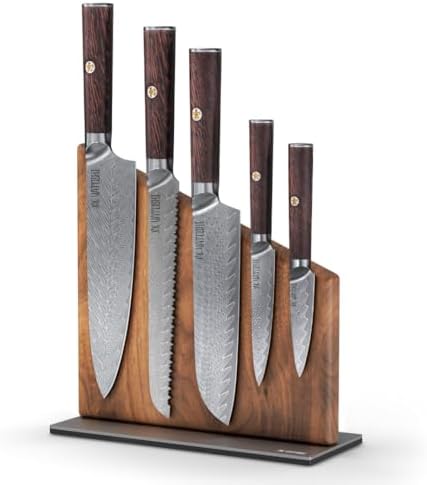
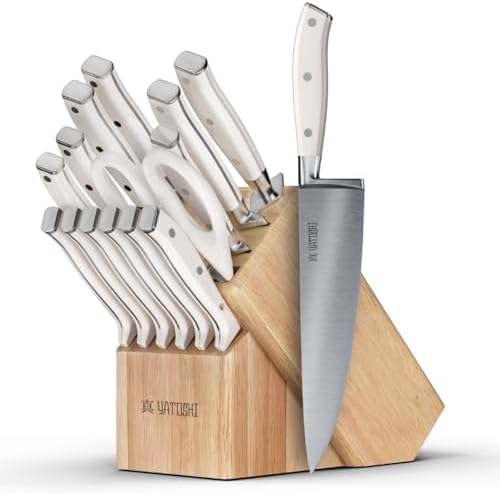
Yatoshi White Knife Block Set
For those hosting dinner parties, find the best steak knife set for home dining here.
$143.99 price checked August 2026
How Do I Measure the Correct Blade Length?
To determine the correct blade length before ordering, you should measure the physical space and the types of ingredients you handle most often. Unlike some kitchen tools, blade length is not a universal standard, so establishing your personal requirement is essential for a functional kitchen setup.
Measuring Your Required Reach
Place your most frequently used cutting board on your counter and identify the maximum area you need to work within. Measure the distance from the handle’s starting point to the tip of the blade required to make a single, continuous cut through your largest typical ingredient, such as a large butternut squash or a full loaf of bread.
Understanding the physical feel of your tools is easier when you learn about blade weight for kitchen cutlery.
Finding the Length on Product Listings
The blade length is typically listed in the product description or technical specifications as a numerical value followed by “inches” or the ” symbol. Note that this measurement refers only to the sharpened metal edge, not the total length of the knife including the handle or bolster.
Verifying with Existing Tools
If you already own a knife that feels comfortable to use, measure that blade with a standard ruler. If that knife feels too small or too large for your hands, use that measurement as a baseline to adjust your requirements by one or two inches in either direction.
What Happens if the Blade Length is Too Small or Too Large?
Choosing a blade length that is too small or too large creates specific functional issues that can hinder your efficiency and affect the longevity of the cutlery.
The Impact of an Under-Sized Blade
When a blade is too short for your tasks, you are forced to use multiple strokes to cut through a single item. This repetitive motion can lead to uneven cuts, as the knife must be repositioned frequently. For large items like heavy meats or large vegetables, a small blade may lack the necessary leverage, making the cutting process feel laborious rather than fluid.
The Impact of an Over-Sized Blade
A blade that is too long for your physical reach or your workspace can become a safety hazard or a cumbersome tool. If the blade exceeds your comfortable reach, you may find yourself overextending your arm, which reduces control and increases the risk of the blade slipping. In a small kitchen, a very long blade may also be difficult to maneuver without hitting nearby objects or your own hands.
You should also consider how many blades you need by comparing different blade counts for kitchen cutlery.
What Should I Do if I Fall Between Two Blade Lengths?
If your requirements fall between two standard sizes, such as choosing between an 8-inch and a 10-inch blade, the decision should be based on your physical height and the volume of food you typically prepare.
Choosing Based on Physical Reach
If you are of shorter stature, the smaller of the two options is usually the safer and more comfortable choice. A shorter blade allows for a more compact grip and keeps the weight of the knife closer to your hand, providing better balance for most home tasks.
Choosing Based on Ingredient Volume
If you are of average height but frequently cook for large groups, choose the larger blade length. The extra length provides the mechanical advantage needed to slice through large items in a single motion, which is the primary benefit of a longer blade. If you only cook for yourself, the smaller length will offer better agility for everyday tasks.
Checking Return Policies for Sizing
Because blade length is a matter of personal feel, some retailers offer specific return windows for sizing issues. Check the return policy before purchasing to ensure you can exchange the item if the physical dimensions do not match your expectations during the first use.