
A pneumatic nail gun is a power tool that uses compressed air to drive nails into wood, metal, or masonry. It functions by converting the energy from an air compressor into a mechanical strike, allowing a user to secure materials much faster than using a manual hammer.
The primary problem this tool solves is the limitation of human speed and physical fatigue. In construction or large-scale DIY projects, driving hundreds of fasteners by hand is slow and physically taxing. A pneumatic nail gun provides a consistent, high-force strike that ensures nails are driven to a uniform depth, which prevents “proud” nails that snag surfaces or “over-driven” nails that split the lumber.
How does a pneumatic nail gun work?
A pneumatic nail gun works by using a cycle of air pressure to move a firing pin against a nail.
- Air enters the tool through an intake hose connected to a compressor.
- The user pulls the trigger, opening a valve that allows a burst of compressed air into a cylinder.
- The air pressure pushes a piston forward with significant force.
- The piston strikes a firing pin or a striking blade.
- The striking component hits the head of the nail, propelling it into the workpiece.
- The air pressure drops, the valve closes, and the tool resets for the next shot.
Pneumatic Nail Guns we have reviewed in detail
Prices across these 3 run from $162.95 to $298.18; each one has a full review here.
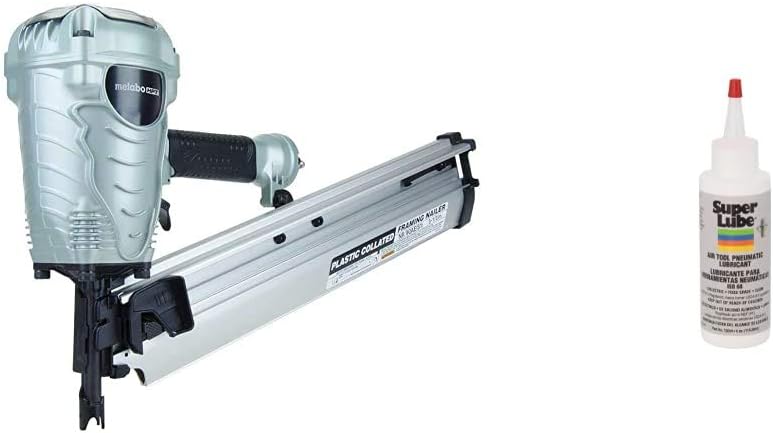

BHTOP 9021NS 21 Degree Framing Nailer
$298.18 price checked August 2026
Industrial warehouses often require high-volume output, so view our best coil pallet nailer roundup for heavy-duty options.
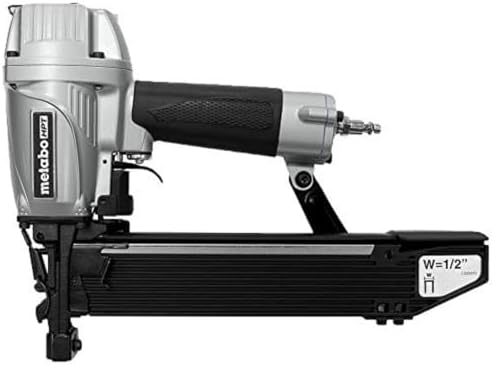
Parts and stages that matter to a buyer
Understanding the components of a pneumatic nail gun helps you identify which features impact the durability and speed of your work.
Nail types and gauges
The gauge size defines the wire thickness of the nail. A 16-gauge nail is standard for general framing and siding, while an 18-gauge nail is thinner and used for finish work like trim or molding. A 23-gauge nail is very thin, often used for small-scale projects where the nail head must be nearly invisible.
Nail collation and magazines
Nail collation refers to how the nails are arranged in a strip or block. A collated nail system ensures that the nail feeds into the nosepiece in the correct orientation. You must match your magazine type—such as a strip feed or a coil feed—to the specific collation of the nails you purchase.
To better understand the technical data, explore pneumatic nail gun terms and specs for a clear breakdown.
Operating pressure and CFM
Operating pressure is the amount of PSI (pounds per square inch) the tool requires to fire consistently. Most framing nail guns operate near the 120 PSI threshold, which is the standard for framing and roofing applications. CFM (cubic feet per minute) is the volume of air the compressor provides; if your compressor cannot provide enough CFM, you will experience a pressure drop, causing the tool to fire slower or fail to drive the nail completely.
Nosepiece and angle geometry
The nosepiece is the front of the tool where the nail exits. The geometry of this part determines the firing angle. A 21-degree angle is the standard for framing nails, while a 15-degree angle is required for coil siding nails. Choosing a tool with the wrong angle for your specific nail type can lead to jamming or the inability to reach the correct depth.
What does having a pneumatic nail gun change in practice?
Having a pneumatic nail gun changes the speed and consistency of assembly but requires a specific infrastructure that manual tools do not.
Speed and consistency of results
In a professional setting, a pneumatic nail gun allows a worker to set a stud or a piece of siding in seconds. Because the force of the air strike is consistent, you can achieve a uniform depth across a large surface. This prevents the common mistake of leaving nails sticking out, which can snag materials or cause safety hazards during the finishing phase.
Infrastructure and setup requirements
Unlike a cordless nailer, a pneumatic tool requires a constant supply of compressed air. This means you must have a compressor, a hose, and a way to manage the air supply. In practice, this means the tool is most effective when you can move the compressor to the work area or run long hoses. If you are working in a tight space where a hose cannot reach, the pneumatic option is not viable.
Who needs a pneumatic nail gun?
You need a pneumatic nail gun if your project involves high-volume fastening or requires the specific force of compressed air.
Professional and high-volume use
Carpenters, roofers, and industrial framers need pneumatic nail guns because the speed of operation is essential for their livelihood. If you are building a house or a large deck, the ability to fire nails rapidly with consistent depth is a requirement rather than a luxury.
DIY and home use conditions
A homeowner might not need a pneumatic nail gun if they only plan to build small items like birdhouses or occasional furniture. In these cases, the cost of a compressor and the hassle of managing hoses outweigh the benefits. You should only consider a pneumatic nail gun if you have a dedicated workspace where a compressor can reside and you plan to perform repetitive framing or siding tasks.