
A rebar bender is a specialized tool designed to deform steel reinforcement bars into specific shapes, such as hooks, stirrups, or bends. It allows for the precise manipulation of heavy steel rods to meet the structural requirements of concrete foundations, columns, and beams. By providing a mechanical advantage over the raw strength of the steel, these tools ensure that reinforcement can be shaped to fit complex architectural designs without compromising the integrity of the metal.
The primary problem a rebar bender solves is the physical impossibility of manually shaping heavy-gauge steel with standard tools. Without a dedicated bending mechanism, attempting to bend thick reinforcement bars leads to inconsistent angles, structural weaknesses, or the risk of the metal snapping due to improper force distribution. A rebar bender provides the controlled leverage necessary to achieve exact geometry while maintaining the structural load-bearing capacity of the material.
How Does a Rebar Bender Work?
A rebar bender works by applying concentrated force to a specific point on a steel bar to initiate a controlled deformation. The process follows a consistent mechanical sequence to ensure the bend is uniform and structurally sound.
- Positioning: The operator places the rebar into a fixed jig or against a bending head, ensuring the bar is aligned with the desired axis.
- Point of Contact: The tool applies pressure at a specific radius. The distance from the center of the bar to the point of contact determines the curvature of the bend.
- Force Application: Depending on the tool type, the operator applies force via a hydraulic cylinder, a manual lever, or a mechanical crank. This force overcomes the yield strength of the steel.
- Deformation: The steel undergoes plastic deformation, where the atoms in the metal shift to a new permanent position without the material fracturing.
- Setting: The operator holds the pressure until the desired angle—such as a 90-degree bend—is achieved, then releases the mechanism to lock the shape in place.
Rebar Benders we have reviewed in detail
Prices across these 3 run from $220.90 to $569.90; each one has a full review here.


Metabo HPT Portable Rebar Bender and Cutter
$569.90 price checked August 2026
To better understand technical specifications, you should learn common rebar bender terms and specs.
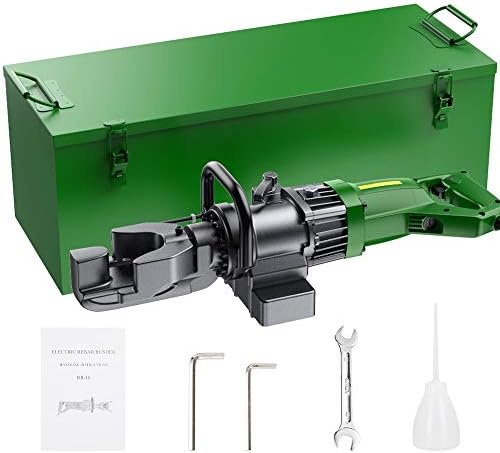
What Parts of a Rebar Bender Matter Most?
Several mechanical components determine the capacity and precision of a rebar bender, each affecting the final output of the construction project.
Bending Capacity and Diameter Limits
Bending capacity refers to the maximum diameter of the bar the tool can successfully shape. For example, a tool rated for 1/2-inch bars cannot safely bend 1-inch bars. Choosing a tool with a capacity that matches the project’s largest bar size ensures the machine won’t stall or suffer mechanical failure under load.
Leverage and Power Source
The power source defines how much physical effort is required from the operator. Manual benders use long handles to create mechanical advantage, which is suitable for low-volume work. Hydraulic benders use fluid pressure to multiply force, allowing a single person to bend thick bars that would otherwise require a team or heavy machinery.
Knowing your project requirements is vital, so calculate the required bending angle for rebar.
Bend Radius and Material Integrity
Bend radius is the radius of the curve created by the tool. If the radius is too tight, the steel can suffer from material work hardening, where the metal becomes brittle and prone to snapping. A proper bender ensures a radius that distributes stress evenly, preventing structural crack propagation in the finished concrete.
What Does Having a Rebar Bender Change in Practice?
Having a rebar bender changes the workflow from a slow, manual process to a repeatable industrial operation. In a practical workshop setting, a bender allows for the rapid production of stirrups—the square loops of steel that reinforce columns. Without one, these would have to be tied or bent by hand, which is slow and prone to human error.
In large-scale construction, the difference is most visible in consistency. A bender ensures that every 90-degree bend is identical, which is critical for the structural integrity of the build. However, the difference is less significant for very small-scale projects using thin wire or light-gauge rods, where a simple manual jig or even a heavy-duty vise might suffice.
Risk of Work Hardening
A significant practical consideration is the risk of material work hardening. If a bender is used to force a bar into a shape too quickly or at an incorrect angle, the steel can become brittle. Proper use of a rebar bender involves choosing the correct tool for the specific grade of rebar, such as Grade 60 Rebar, to ensure the metal remains ductile enough to support the intended load.
Who Needs a Rebar Bender?
Determining who needs a rebar bender depends on the volume and thickness of the reinforcement required for a project.
Professional Contractors and Fabricators
Professional contractors and structural steel fabricators require rebar benders as a standard piece of equipment. Because they work with high-volume requirements and heavy-gauge steel, they need the speed and safety of hydraulic or large-scale mechanical systems to meet construction deadlines.
Small Scale DIYers and Residential Builders
Small-scale DIYers or residential builders may only need a rebar bender if they are constructing heavy foundations or retaining walls that require thick reinforcement. If a project only involves light-gauge mesh or thin rods, a manual bender or a different shaping method is often more cost-effective and sufficient.
When a Bender is Not Enough
A rebar bender is not the solution for every steel-shaping task. If a project requires complex, multi-axis curves or high-volume, automated production, a manual or portable bender is insufficient. In those cases, the requirement shifts from a portable bender to a CNC automated rebar processing line or heavy industrial machinery.
The other Rebar Bender guides we have published
- Which Portable Electric Rebar Bender Is Best for Construction Sites?
- Best Manual Rebar Bender for Home Use
- Electric Hydraulic Rebar Benders for 5/8 Inch Rebar Compared
- Choosing the Best Rebar Bender and Cutter 2 in 1 Tool
- The Heavy Duty Rebar Benders That Work Best for 25mm Steel
- Which Best Electric Rebar Bender for 110v Power Should I Get?