
When researching a rebar bender, you will encounter a mix of critical engineering specifications and marketing fluff. Load-bearing terms—such as bend radius, material grade, and hydraulic capacity—dictate whether a tool can actually shape the steel you need without snapping the bar or the machine. Marketing vocabulary, like “heavy-duty” or “professional-grade,” provides no measurable data and should be ignored in favor of specific numbers. To make an informed decision, you must focus on the physical limits of the tool’s geometry and the pressure it can exert.
Rebar Bender Capability and Performance Terms
Rebar bender capability terms define the physical limits of what a machine can bend, primarily governed by the size of the bar and the force required to deform it.
- Bend Radius – This is the radius of the curve produced by the tool; a smaller radius allows for tighter, sharper bends, while a larger radius is required for thicker bars to prevent snapping.
- Max Bar Diameter – This is the largest thickness of rebar the tool can safely process; you must ensure your heaviest required bar is smaller than this limit to avoid structural failure.
- Hydraulic Pressure (PSI/Bar) – This measures the force the system can exert; higher pressure ratings allow the tool to bend thicker Grade 60 rebar or larger diameters more quickly.
- Tonnage Capacity – This is the total weight of force the bender can exert; a higher tonnage rating is necessary for heavy-duty construction where high-diameter bars are standard.
- Grade 60 Rebar – This is the standard yield strength of the steel; knowing your material grade is essential because higher grades require more force to bend than lower grades.
- Material Work Hardening – This is the process where steel becomes brittle and prone to snapping if bent too quickly or at the wrong angle; slower, controlled bending is required to prevent this failure.
- Structural Crack Propagation – This refers to micro-fractures caused by exceeding the bend radius; choosing a tool that allows for a proper radius ensures the structural integrity of the reinforcement.
Where these choices show up in our reviews
These 3 have their own full review on this site, and run from $219.99 to $569.90.
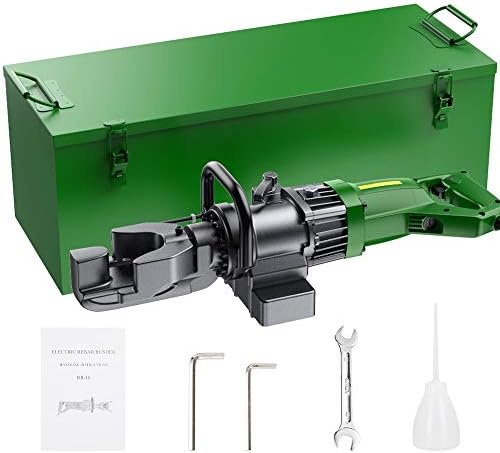

1100 W Hydraulic Rebar Bending Machine
To understand the different models available, learn about the various rebar bender types that suit different project scales.
$219.99 price checked August 2026

Anbull 1200W Electric Hydraulic Rebar Bender
$569.90 price checked August 2026
Read our full Anbull Rebar Bender review
For a foundational overview, see how a rebar bender operates to understand its core mechanics.
Rebar Bender Physical and Mechanical Terms
Rebar bender physical terms describe the build and mechanics of the unit, affecting how it sits in your workspace and how it handles the physical stress of the job.
- Frame Weight – This is the total weight of the machine; a heavier frame usually indicates a more stable base that won’t shift during high-pressure bends.
- Footprint – This is the total floor space the machine occupies; you need to measure your workspace to ensure the bender can operate with enough clearance for the bar to swing.
- Manual vs. Hydraulic – This describes the power source; manual benders rely on leverage and human力, while hydraulic benders use fluid pressure to multiply force for heavy-duty work.
- Leverage Ratio – In manual tools, this is the distance from the pivot point to the handle; a longer handle provides a better ratio, making it easier to bend thicker steel.
- Pivot Point – This is the axis around which the bar rotates; a robust, reinforced pivot point is necessary to prevent the tool from warping under heavy loads.
Rebar Bender Compatibility and Standards
Rebar bender compatibility terms ensure the tool meets the requirements of your specific project and the standards of the construction site.
- 90-degree Bend – This is the standard angle for structural reinforcement; ensure the tool is rated for 90-degree turns, as this is the most common requirement for stirrup fabrication.
- 18/10 Stainless Steel – This refers to the material of the bender’s own components; higher-quality stainless steel resists corrosion and maintains its shape under high stress.
- Portable vs. Stationary – This defines the mobility of the unit; portable units are for small-scale jobs, while stationary units are the benchmark for high-volume production.
- 25mm (1 inch) Diameter – This is the threshold for portable hydraulic units; bars larger than 25mm typically require industrial stationary machinery rather than portable tools.
Commonly Confused Rebar Bender Terms
Several terms in the rebar bending category are often confused by buyers, leading to incorrect tool selection.
Bar Diameter vs. Bend Radius
Bar diameter is the thickness of the steel rod itself, while bend radius is the curve of the finished shape. A thick bar (large diameter) will naturally require a larger bend radius to prevent the steel from snapping.
Hydraulic Pressure vs. Tonnage
Hydraulic pressure is the force exerted by the fluid system, while tonnage is the resulting weight of force applied to the bar. While they are related, tonnage is the practical limit for what the tool can actually move or shape.
Manual vs. Portable
A manual bender is powered by human effort, whereas a portable bender is usually hydraulic or electric but designed to be moved. You can have a manual bender that is portable, but you cannot have a hydraulic bender that is manual.
Browse our other Rebar Bender pages
- Which Portable Electric Rebar Bender Is Best for Construction Sites?
- Best Manual Rebar Bender for Home Use
- Electric Hydraulic Rebar Benders for 5/8 Inch Rebar Compared
- Choosing the Best Rebar Bender and Cutter 2 in 1 Tool
- The Heavy Duty Rebar Benders That Work Best for 25mm Steel
- Which Best Electric Rebar Bender for 110v Power Should I Get?