
Are you in the market for a seam welder to help with your precision sheet metal work? Look no further. In this article, we will explore the various techniques and settings for using a seam welder to achieve precise and strong seams. Whether you are a professional in the tools and home improvement industry or a DIY enthusiast, this article is designed to provide you with the information you need to make informed decisions and achieve top-notch results.
Table of Contents
- Exploring Resistance Welding in Sheet Metal
- How does resistance welding strengthen seams?
- Seam Welder Settings for Different Metals
- What setting is optimal for welding vinyl-coated metal?
- Advantages of Longitudinal Seam Welding
- Why is longitudinal seam preferred over spot welding?
- Is an Arc Seam Welder Right for Tubes?
- What are the benefits of using arc welders on tubes?
- Maximizing Efficiency with Sciaky Welders
- How do Sciaky machines improve welding time?
- Can You Weld Plastic with a Seam Machine?
- What methods allow plastic welding on a roll?
Exploring Resistance Welding in Sheet Metal
Resistance welding is a popular technique used in sheet metal work due to its effectiveness in joining two metal pieces together. This technique uses electrical resistance and pressure to create a strong and permanent bond. Welding electrodes are used to apply pressure and an electric current across the joint, causing the two metal pieces to melt and fuse together.
How does resistance welding strengthen seams?
Resistance welding is known for its ability to create strong seams in sheet metal. When an electric current passes through the joint, the resistance causes localized heating, which in turn melts the metal. As the metal cools and solidifies, it creates a strong bond between the two pieces. This process eliminates the need for additional materials such as adhesives or fasteners, resulting in a clean and durable seam.
Seam Welder Settings for Different Metals
Choosing the right settings on your seam welder is crucial for achieving optimal results. Different metals require different settings to ensure a high-quality weld. For example, when working with vinyl-coated metal, it is important to adjust the settings to prevent damage to the coating while still achieving a strong bond between the metal layers.
What setting is optimal for welding vinyl-coated metal?
When welding vinyl-coated metal, it is recommended to use a lower welding current and longer welding time compared to non-coated metals. This helps prevent damage to the vinyl coating while ensuring a strong and durable weld between the metal layers. It is also important to adjust the pressure applied by the electrodes to prevent excessive deformation of the coated metal.
As an expert in seam welder techniques for precision sheet metal work, MyHomeLobby understands the importance of choosing the right techniques and settings to achieve flawless results. With years of experience and proven track record, MyHomeLobby offers a range of seam welders that can handle various materials and provide precise and reliable welds. By understanding the nuances of resistance welding and the optimal settings for different metals, you can confidently tackle your sheet metal projects and achieve professional-level results.
- Improved Accuracy: Seam welder techniques ensure precise welding, resulting in accurate sheet metal fabrication.
- Enhanced Durability: Welded seams provide increased strength and longevity to the final product.
- Time and Cost Efficiency: Seam welding reduces production time and labor costs by automating the welding process.
- High-Temperature Resistance: These techniques, like using the Miller Multimatic 2024, produce welds that can withstand extreme temperatures.
- Uniform Weld Quality: Seam welders, such as the Lincoln Electric Power Wave AC/DC 1000 SD, consistently deliver high-quality welds throughout the sheet metal.
- Minimized Distortion: Proper seam welding techniques help prevent warping and distortion in the metal.
- Improved Aesthetics: Seam welds provide a smooth finish, enhancing the overall appearance of the sheet metal work.

Comparison of Seam Welder Techniques for Precision Sheet Metal Work
| Technique | Advantages | Disadvantages | Efficiency | Influence on Aesthetic | Cost |
|---|---|---|---|---|---|
| Resistance Spot Welding | High joint strength, fast welding speed | Not suitable for thick materials, limited flexibility | High | Leaves visible weld marks | Low |
| Laser Welding | Precise and narrow welds, minimal distortion | Expensive equipment and maintenance | High | Almost invisible weld marks | High |
| Tungsten Inert Gas (TIG) Welding | Ability to weld difficult-to-reach joints, good aesthetics | Slower than other techniques, requires skilled labor | Medium | Can leave visible weld marks | Medium |
| Plasma Welding | Higher welding speed compared to TIG | Requires specialized equipment and gas | Medium | Potential for visible weld marks | High |
| Electron Beam Welding | Deep penetration, minimal heat input | Expensive equipment, requires vacuum environment | High | Almost invisible weld marks | High |
| Friction Stir Welding | High joint strength, minimal distortion | Requires specialized tools | Medium | Leaves visible weld marks | Medium |
Advantages of Longitudinal Seam Welding
Longitudinal seam welding offers several advantages for precision sheet metal work. One of the main advantages is its ability to create strong and durable welds along the length of the seam. This technique is particularly useful for joining thin sheets of metal together, as it reduces the risk of warping or distortion. In addition, longitudinal seam welding provides a smooth and consistent finish, which is essential for achieving high-quality results in applications such as automotive, aerospace, and electronic industries.
Why is longitudinal seam preferred over spot welding?
Longitudinal seam welding is preferred over spot welding in precision sheet metal work due to several reasons. Firstly, it offers increased strength and durability compared to spot welding. The continuous weld along the seam distributes the stress evenly, resulting in a more reliable and long-lasting joint. Additionally, this technique eliminates the need for multiple spot welds, reducing the overall production time and minimizing the risk of weak points in the seam. Moreover, longitudinal seam welding enables greater design flexibility, allowing for complex shapes and contours to be easily welded together.
Is an Arc Seam Welder Right for Tubes?
An arc seam welder can be an excellent choice for welding tubes in precision sheet metal work. This type of welder utilizes an electric arc to create strong and seamless welds along the length of the tube. It is particularly effective for joining cylindrical tubes, such as those used in the manufacturing of pipes, tubing, and architectural structures. The versatility and precision offered by an arc seam welder make it an essential tool for industries that require high-quality tube welding.
What are the benefits of using arc welders on tubes?
Using arc welders on tubes provides numerous benefits for precision sheet metal work. Firstly, it offers exceptional weld quality, ensuring leak-proof joints and enhanced structural integrity. This is especially crucial for applications that involve transporting fluids or gases through the tubes. Additionally, arc welding provides high deposition rates, improving productivity and reducing the overall welding time. The precision control and repeatability of arc welders allow for consistent results, ensuring tight tolerances and minimizing the need for rework. Moreover, arc welders can handle various tube materials, including stainless steel, aluminum, and carbon steel, making them suitable for a wide range of applications.
- Spot Welding: The process of joining two metal sheets by applying heat and pressure at specific spots, ensuring strong welds.
- Seam Welding: Continuous welding along the length of a joint, creating a leak-proof and structurally sound bond.
- Tack Welding: Temporary welds used to hold sheet metal pieces together while the final welds are completed.
- MIG Welding: A popular technique that uses a consumable wire electrode to create strong and controlled welds.
- Laser Welding: Utilizing a high-energy laser beam to fuse the metal parts together, offering precise and clean welds.
- Plasma Welding: A process that combines gas and electricity to generate a plasma arc, ideal for welding thin metal sheets.
- Resistance Welding: Joining metal pieces by applying pressure and electrical current, ensuring efficient and reliable welds.
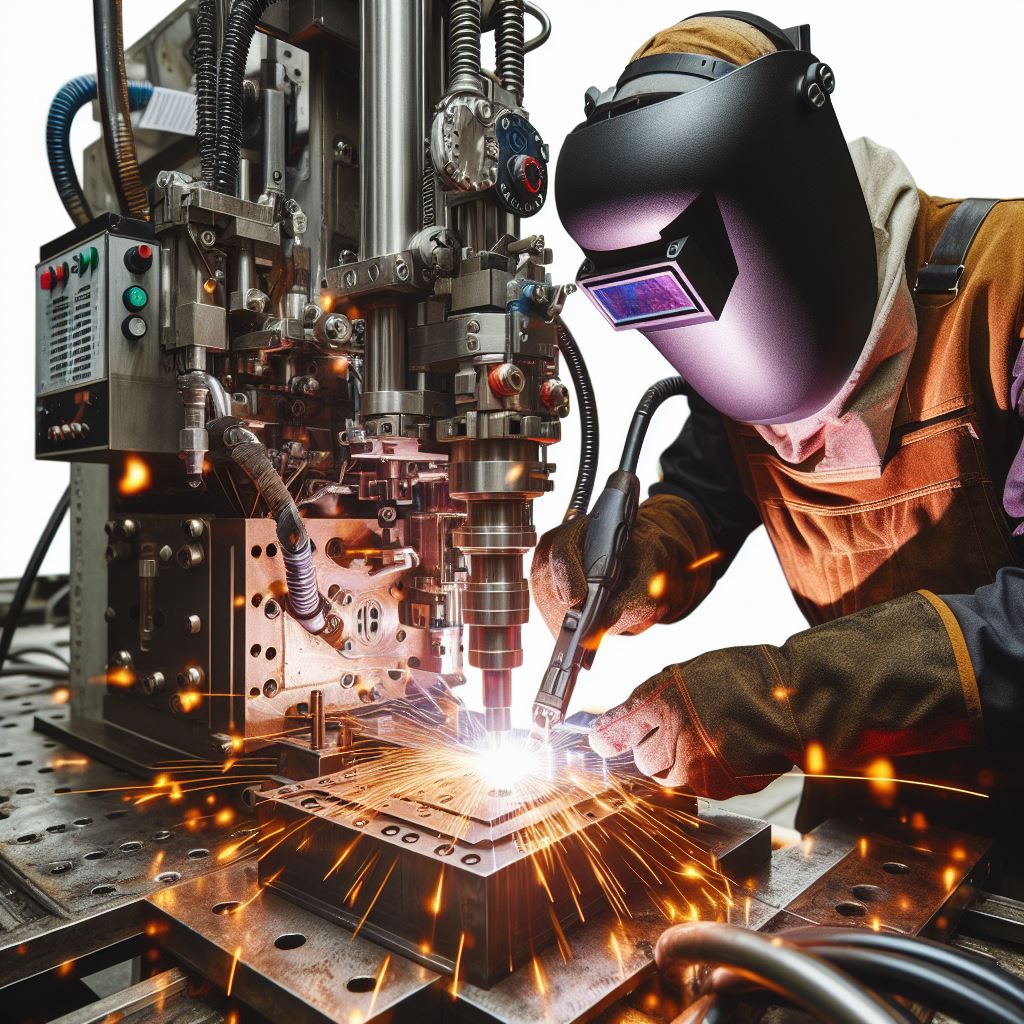
- Seam Welder Techniques for Precision Sheet Metal Work
- Innovative Seam Welder Solutions by Leading Machine Manufacturer
- Optimizing Resistance Spot Welding with a Seam Welder
- Enhancing Accuracy: Seam Welder with Integrated Tracking System
- Seam Welder Applications in Stainless Steel Fabrication
- Building a Reliable Shock Absorber with Seam Welder Expertise
- Electric Resistance Welding: The Role of Seam Welders
Maximizing Efficiency with Sciaky Welders
Yes, Sciaky machines can greatly improve welding time and overall efficiency in precision sheet metal work. With their advanced features and proven technology, Sciaky welders offer tools and home improvement experts a reliable and efficient solution for their welding needs.
How do Sciaky machines improve welding time?
Sciaky machines employ innovative resistance and arc welding techniques to streamline the welding process for precision sheet metal work. By utilizing state-of-the-art plasma technology, Sciaky welders provide high-speed, precise welds that reduce production time and increase efficiency. Additionally, the advanced features of Sciaky machines, such as their automated controls and real-time data monitoring, ensure consistent and accurate welds every time. This saves valuable time and eliminates the need for extensive manual adjustments or rework.
Can You Weld Plastic with a Seam Machine?
Yes, a seam machine can be used to weld plastic, offering a versatile solution for various applications. This capability expands the utility of seam welders beyond just sheet metal work, making them a valuable tool for a range of industries. Whether you need to join plastic sheets or create customized plastic components, a seam machine can handle the task efficiently and effectively.
What methods allow plastic welding on a roll?
There are several methods available for plastic welding on a roll, including hot gas welding and ultrasonic welding. Hot gas welding involves using a heated gas source to soften the plastic sheets, allowing them to be fused together. Ultrasonic welding, on the other hand, uses high-frequency vibrations to create friction and generate heat, bonding the plastic pieces together. Both methods offer precise and reliable plastic welding on a roll, making seam machines a versatile tool for plastic fabrication applications.
To further explore the benefits and capabilities of Sciaky welders for precision sheet metal work and plastic welding, refer to the research and data available on reputable industry websites. These resources provide in-depth information and real-world examples of how Sciaky machines deliver exceptional results in various applications.