
The primary outcome of using a spot welder is the creation of a permanent, high-resistance electrical bond between two metal surfaces, typically to join nickel strips to lithium-ion cells or to join metal components in jewelry and hobbyist electronics. While owning a dedicated machine is the standard path for hobbyists, it is not the only way to achieve a reliable weld. Depending on your project volume and technical requirements, alternative methods can provide the same result with different cost structures and time investments.
Can I pay someone else to do the spot welding?
Hiring a professional service to perform spot welding is a viable alternative to purchasing a spot welder for one-off projects or small production runs. This route involves sending your components to a fabrication shop or a specialized battery assembly service that possesses industrial-grade equipment.
This option costs more per unit than DIY welding but removes the need to purchase, store, and maintain a machine. It is most effective when you only need a handful of welds, as the overhead of a professional shop is high. This route stops making sense once your project volume reaches a point where the per-unit cost of outsourcing exceeds the amortized cost of owning a portable spot welder.
Suitability for Small Batches
Outsourcing is ideal for users who lack the workspace or the time to learn the nuances of pulse welding. If you need to join 10 to 20 cells, paying a professional ensures a consistent weld depth that matches industrial standards.
Where these choices show up in our reviews
3 reviewed options, $109.99 to $399.99, with the full write-up behind each name.

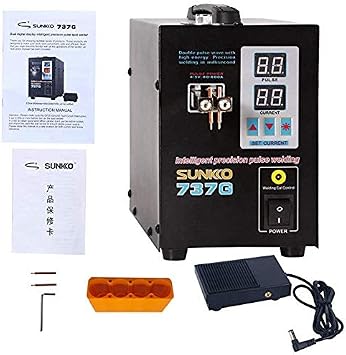
YaeCCC 737G Battery Spot Welder
$127.99 price checked August 2026
Read our full YaeCCC 737G review
If you are working with delicate pieces, see how to choose the best spot welder for jewelry repair.

Automatic CNC Handheld Spot Welding Machine
$399.99 price checked August 2026
Read our full Automatic CNC Handheld Spot Welding Machine review
Is buying a used spot welder a good alternative?
Buying a used spot welder provides a way to access higher-tier hardware, such as industrial AC-powered resistance spot welders, at a lower entry price than new retail. These machines often offer superior weld depth and structural integrity compared to capacitor-based portable units.
The cost of used equipment depends heavily on the condition of the tips and the integrity of the capacitor bank or power supply. This beats buying new when you require a specific industrial standard that is otherwise cost-prohibitive. This alternative stops making sense if the machine requires significant repairs, such as replacing a blown capacitor or a corroded welding tip, which can approach the cost of a new consumer unit.
Verifying Tip Integrity
When evaluating used units, the condition of the welding tips is the primary data point. Oxidized or worn tips increase electrical resistance, leading to inconsistent weld quality or burnt material on the nickel strip.
Can I use other tools to achieve a spot weld?
Using alternative metal-joining methods, such as soldering or mechanical fastening, serves as a functional substitute for spot welding in specific applications. Soldering involves melting a filler metal to join components, while mechanical fastening uses rivets or screws.
These methods are generally cheaper in terms of equipment but may be less effective for high-current applications. Soldering can cause excessive heat soak in lithium cells, which may lead to internal chemistry degradation. Mechanical fastening is a reliable alternative for structural joins where electrical conductivity is not the primary requirement. These alternatives stop making sense when the project requires the low-profile, high-strength bond that only a pulse weld can provide.
Soldering vs. Pulse Welding
Soldering is a common mistake for battery assembly because it lacks the rapid pulse of a spot welder. A spot welder uses a high-current pulse to join the metal in milliseconds, preventing the heat from penetrating too deeply into the battery cell.
Comparison of Spot Welder Alternatives
| Route | Who it suits | Main Advantage | Where it breaks down |
|---|---|---|---|
| Professional Service | One-off projects or low volume | No equipment ownership or maintenance | High per-unit cost for large quantities |
| Used Equipment | Advanced hobbyists seeking industrial specs | Access to high-power hardware at a discount | Risk of faulty components or worn tips |
| Soldering/Fastening | Non-electrical structural joins | Minimal equipment cost | Risk of heat soak or bulky connections |
When is buying a spot welder the right choice?
Buying a spot welder is the correct decision when you intend to perform repeated welds over a long period, such as building a battery pack and then moving on to other projects. It is the right choice when you need the specific benefits of pulse welding, such as maintaining the integrity of thin nickel strips (0.1mm to 0.3mm) without melting them.
Ownership is also the correct path when you require a specific workflow where you need to perform welds immediately as you assemble a pack. If you plan to build more than three battery packs over the next year, the cost of the machine is typically recovered by the ability to perform unlimited welds and the ability to troubleshoot your own connections in real-time.
Reviewed by the MyHobbyLobby editorial team. MyHobbyLobby writes these guides from the 92 most-reviewed spot welder listings in our retail dataset, not from manufacturer copy.