
Pulse duration is the length of time, measured in ms, that the spot welder applies a high-current electrical pulse to join two pieces of metal. The specific ms value you need depends on the thickness of the nickel strip and the specific heat requirements of the battery cells you intend to weld.
Which Pulse Duration Suits My Project?
| If this is you | The Pulse Duration that suits you | Why |
|---|---|---|
| Working with thin 0.1mm nickel strips and standard 18650 cells | Lower pulse duration (e.g., 1ms to 3ms) | Thin nickel requires a very fast pulse to create a bond before the heat travels too far into the battery cell. |
| Welding thicker 0.3mm nickel strips for high-drain applications | Medium pulse duration (e.g., 4ms to 7ms) | Thicker material requires a longer duration to allow the electricity to penetrate the full depth of the strip. |
| Joining large battery packs with heavy-gauge busbars | Higher pulse duration (e.g., 8ms+) | Heavy-gauge materials have high resistance and require a sustained pulse to reach the necessary melting point. |
| Performing precision work on delicate components or silver/gold | Very short, high-frequency pulses | Precious metals have lower melting points and require minimal ms of exposure to prevent melting the component itself. |
| Building DIY power walls with large-format cells | Variable pulse duration based on material | The variety of materials in large-scale builds requires a machine capable of adjusting ms based on the specific nickel thickness. |
Reviewed examples from this category
3 reviewed options, $169.99 to $208.99, with the full write-up behind each name.

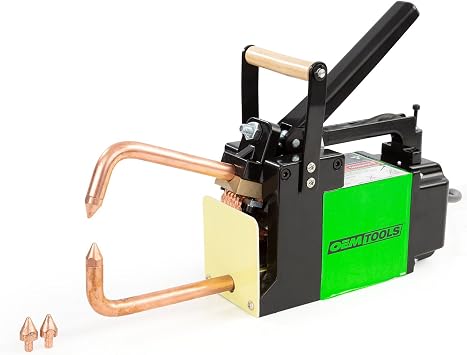
OEMTOOLS 24819 Spot Welder
$169.99 price checked August 2026
Read our full OEMTOOLS 24819 review
If you are a jeweler, you should compare the best spot welder for gold and silver jewelry to find the right tool for fine metalwork.

How Do I Determine My Required Pulse Duration?
To establish your required pulse duration, you must first measure the thickness of the nickel strip you plan to use. Use a digital caliper to find the exact thickness in mm, as this is the primary variable that dictates the ms requirement.
Confirming Nickel Strip Thickness
Most nickel strips are sold in standard thicknesses like 0.1mm, 0.15mm, or 0.2mm. If you are using a pre-cut strip, the manufacturer usually prints the thickness on the packaging or the header card. If the thickness is not listed, use a caliper to measure the strip at three different points to ensure consistency.
Finding the ms Value on the Machine
The pulse duration in ms is usually found in the technical specifications section of the manufacturer’s manual or on the device’s control interface. If the spot welder has a digital display, the current pulse setting will be shown in ms. If it is an analog machine, the pulse duration is often tied to a specific “power” or “time” dial, where the manufacturer provides a conversion chart in the documentation.
If you are unsure of the correct ms for your specific material, a common practice is to start with a lower duration and gradually increase it in 1ms increments until a solid, non-peeling weld is achieved. This process allows you to find the minimum effective pulse duration for your specific setup.
Understanding the limits of your machine is vital, so view our guide on power output for spot welders to see your requirements.
What Happens if the Pulse Duration is Incorrect?
Using a pulse duration that is too short for the material results in a “cold” weld. This occurs when the electricity does not stay in contact with the metal long enough to reach the melting point of the nickel.
Identifying Cold Welds
A cold weld appears as a connection that looks finished but fails under physical stress. If you can peel the nickel strip off the battery cell with a firm tug, the pulse duration was insufficient. These welds create high resistance points that can cause localized heating and eventual failure of the battery pack during use.
Identifying Excessive Heat Soak
A pulse duration that is too long leads to excessive heat soak. Because the electricity stays active for too many ms, the heat travels deeper into the battery cell than intended. This can damage the internal chemistry of the lithium cell or, in extreme cases, lead to thermal runaway.
Signs of over-welding include the nickel strip appearing discolored, charred, or “burnt” around the weld point. If the area around the weld shows signs of melting or the battery casing feels hot immediately after the pulse, the ms duration is too high for that specific material thickness.
What Do I Do if I Fall Between Two Pulse Durations?
When your material thickness or application puts you between two standard pulse duration values, you should prioritize the lower ms value and increase it incrementally. It is safer to start with a shorter pulse and add time than to start with a long pulse and risk damaging the battery cells.
The Incremental Adjustment Method
If you are unsure whether 3ms or 5ms is correct for your specific nickel strip, start at 3ms. Perform a test weld on a scrap piece of the same nickel and a dummy cell (if available) or a non-critical part of the pack. If the weld is not structurally sound, increase the setting by 1ms and repeat the test.
Ensuring Material Consistency
Inconsistent results often stem from variations in the nickel strip itself rather than the machine’s pulse duration. If you find that the same ms setting produces a good weld in one spot but a poor one elsewhere, check the thickness of the strip at those two points. Ensuring the nickel thickness is uniform across the entire project will allow you to maintain a consistent pulse duration throughout the build.
If the material is consistently 0.2mm but the weld is still failing, the issue may be the current (Amps) rather than the duration (ms). In such cases, the pulse duration remains correct for that thickness, but the power output of the machine may need to be adjusted.