
Voltage is the measure of electrical potential, expressed in V, that determines how much power a Pro Convection Oven can draw from your building’s electrical system. The specific V requirement you need depends entirely on your existing electrical infrastructure and the size of the oven you intend to operate.
Which Voltage matches my kitchen setup?
| If this is you | The Voltage that suits you | Why |
|---|---|---|
| You are using a standard household kitchen outlet. | 120V | Standard residential circuits in North America provide 120V, which supports smaller countertop convection ovens. |
| You are operating a commercial bakery or professional kitchen. | 240V | Commercial-grade heating elements require 240V to generate the high-wattage heat necessary for large-batch baking. |
| You need to bake full-size sheet pans in a high-volume environment. | 240V | Higher voltage allows for larger heating elements that maintain consistent temperatures across a larger internal cavity. |
| You are limited by the existing wiring in a shared kitchen space. | 120V | 120V units can typically run on a dedicated 15A or 20A circuit without requiring a heavy-duty industrial drop. |
Products in this category with a full review here
These 3 have their own full review on this site, and run from $145 to $1392.85.

Winco ECO-250 Quarter-Size Countertop Convection Oven
$339.86 price checked August 2026
Read our full Winco ECO-250 review
If you are short on space, find the best countertop convection oven for small kitchens to maximize your workspace.

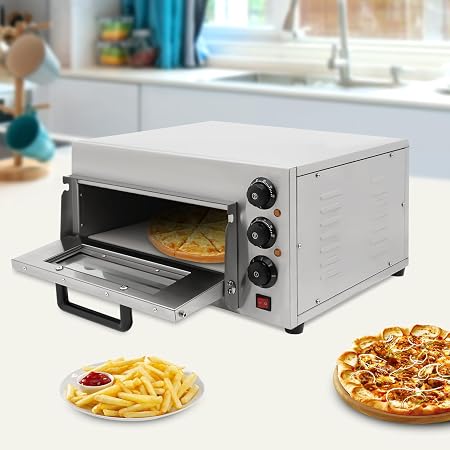
1300W Electric Pizza Baking Oven
$145 price checked August 2026
You should also consider the ideal interior width for convection ovens before finalizing your purchase.
How do I check my available Voltage before ordering?
To determine your available Voltage, you must identify the power supply of the specific outlet or circuit where the Pro Convection Oven will sit. Most residential outlets in the United States provide 120V, while industrial outlets—often characterized by larger plugs or different configurations—provide 240V.
Checking the outlet label
Look for a metal faceplate or a sticker on the outlet box. Manufacturers often stamp the amperage and voltage directly onto the plate, such as “120V 20A” or “240V 30A.” If no label exists, the physical size of the plug is a primary indicator; 120V plugs are standard three-prong types, while 240V plugs are significantly larger and may have four prongs or a twist-lock mechanism.
Checking the breaker panel
Locate your main electrical panel to see the rating of the circuit intended for the kitchen. The breaker will be labeled with its amperage and voltage. If you are unsure, a qualified electrician can use a multimeter to measure the exact V output of the circuit to confirm it matches the requirements of the oven you are considering.
What happens if I choose the wrong Voltage?
Choosing a Pro Convection Oven with a Voltage rating that does not match your infrastructure leads to immediate operational failure or safety hazards. The consequences differ depending on whether the oven’s requirements exceed or fall short of what your circuit provides.
Make sure to evaluate the necessary temperature range for convection ovens to suit your specific cooking needs.
Risks of under-powered circuits
If you attempt to run a 240V Pro Convection Oven on a 120V circuit, the unit will generally fail to power on or will trigger a circuit breaker immediately. Even if the unit manages to draw some power, it will lack the wattage to heat the internal chamber to the required temperature. This results in the oven being unable to reach the target heat, leaving products undercooked or raw in the center while the exterior may dry out.
Risks of over-loading a circuit
Connecting a high-wattage oven to a circuit that cannot handle the sustained draw leads to frequent tripped breakers. Because convection ovens use heavy heating elements, they pull significant current during the initial heat-up phase and during high-temperature baking. If the circuit is not rated for the specific amperage required by the oven’s voltage, the breaker will cut power to prevent the wiring from overheating.
What do I do if my power is between two standards?
In some commercial settings, you may find a “borderline” situation where the available power is sufficient for some models but not others. If your infrastructure provides a specific amperage that sits at the edge of a requirement, you must verify the total wattage of the Pro Convection Oven against the maximum load of your circuit.
Verifying amperage limits
Voltage and amperage work together to determine power; if your voltage is fixed, the amperage determines the capacity. If you are unsure if your 120V circuit can handle a specific oven, calculate the total watts. If the oven’s wattage exceeds the circuit’s capacity (e.g., a 15A circuit at 120V can only handle 1,800 watts total), the oven will not function reliably. In these cases, you must either upgrade the circuit or select a lower-wattage oven that fits within the existing amperage limit.
When to hire an electrician
If your requirements fall between standard residential and commercial grades, consult a qualified installer to determine if a dedicated circuit can be run. It is safer to have a professional confirm that the wiring can support the specific V and amperage of the oven before you purchase the unit. This ensures the oven has a stable power supply and prevents potential electrical fires or damage to the heating elements.
The rest of our Pro Convection Oven guides
- Choosing the Best Countertop Convection Oven with Digital Controls
- The Pro Convection Ovens That Work Best for Baking
- Commercial Countertop Convection Ovens for Pizza Baking Compared
- Choosing the Best Half Size Countertop Convection Oven
- The Quarter Size Countertop Convection Ovens That Work Best for Small Spaces
- Which Countertop Convection Oven Is Best for Small Kitchens?